Where Can You Experience Transformative Contemporary Art Exhibitions in Chicago's Most Vibrant Cultural Hub?
The Evolution of Contemporary Art Galleries and Their Role in Urban Cultural Landscapes
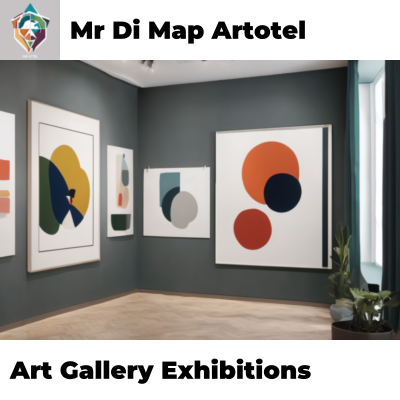
Contemporary art galleries have fundamentally transformed how urban communities engage with creative expression. No longer confined to exclusive, rarefied spaces accessible only to wealthy patrons or academic specialists, modern galleries have democratized access to innovative artistic practices. The landscape of contemporary art presentation has shifted dramatically over the past two decades, moving beyond the sterile white-cube aesthetic that once dominated the gallery world. Today's galleries function as dynamic cultural laboratories where experimentation flourishes, where boundaries between disciplines dissolve, and where audiences from diverse socioeconomic backgrounds encounter work that challenges, provokes, and inspires.
Mr Di Map Artotel stands at the intersection of this cultural revolution. Situated at 5959 Mr Di Ave, Chicago, IL 60608, this establishment has cultivated a distinctive approach to art gallery exhibitions that reflects both the complexity of contemporary practice and the urgent conversations shaping our current moment. The venue operates with a fundamental understanding that galleries serve not merely as retail spaces for aesthetic commodities, but as essential cultural infrastructure where meaning-making occurs through direct, unmediated encounter with artworks.
The significance of having quality contemporary art galleries within reach cannot be overstated. When you have access to well-curated exhibitions featuring emerging and established artists, you gain:
- Exposure to diverse artistic methodologies and conceptual frameworks
- Opportunity to witness firsthand how contemporary artists grapple with urgent social, political, and environmental questions
- Connection to broader cultural conversations happening simultaneously across global art centers
- Spaces for reflection and critical thinking that counterbalance algorithmic consumption patterns
- Community engagement with fellow art enthusiasts and creative practitioners
Chicago's art scene has experienced remarkable growth and increasingly sophisticated curatorial practices. The city's position as a major cultural center extends far beyond its historical reputation, encompassing a thriving ecosystem of independent galleries, artist-run spaces, and institutional venues. Within this context, Mr Di Map Artotel distinguishes itself through thoughtful exhibition programming and commitment to accessibility.
Understanding the Distinctive Curatorial Philosophy Behind Contemporary Art Exhibitions
Curatorial practice represents far more than simple object arrangement. Contemporary curators function as interpreters, critics, educators, and cultural mediators simultaneously. They construct narratives through strategic juxtaposition of artworks, establishing thematic or conceptual coherence across diverse media. The curatorial vision animates a collection of individual pieces, transforming them into a unified discourse. This sophisticated intellectual framework transforms what might otherwise be a passive viewing experience into an active engagement with complex ideas.
Mr Di Map Artotel's approach to exhibition development emerges from genuine engagement with contemporary artistic production rather than market-driven calculation. The difference matters profoundly. When galleries prioritize authentic curatorial vision, exhibitions generate intellectual resonance that extends far beyond the duration of viewing. These exhibitions linger in consciousness, prompting reflection and re-examination of assumptions about art, society, and perception itself.
The Conceptual Frameworks Underlying Contemporary Exhibition Design
Contemporary artists working today frequently draw from:
- Postcolonial theory and decolonial frameworks challenging Western art historical narratives
- Intersectional feminist perspectives examining power, representation, and embodied experience
- Environmental humanities approaches interrogating humanity's relationship with ecological systems
- Digital culture criticism exploring the implications of algorithmic mediation
- Archives and historical reexamination, uncovering suppressed narratives
- Queer temporalities and non-normative approaches to temporality and futurity
- Disability justice frameworks centering accessibility and neurodiversity
- Biopolitics and bioart addressing questions of life, death, and corporeal autonomy
Understanding these frameworks enriches gallery viewing substantially. Rather than encountering artworks as isolated aesthetic objects, visitors recognize how contemporary artists position their practice within broader theoretical and political contexts. The exhibition architecture at Mr Di Map Artotel takes these considerations seriously, presenting work in ways that illuminate conceptual underpinnings without diminishing aesthetic impact.
How Spatial Design Enhances Artistic Presentation
The physical environment where artwork exists shapes interpretive possibilities fundamentally. Gallery architecture—wall dimensions, ceiling height, lighting systems, floor materiality, traffic flow patterns—functions as part of the work itself. Thoughtful spatial design guides attention, encourages particular temporal experiences, and establishes relational dynamics between viewer and artwork.
Professional galleries like Mr Di Map Artotel employ trained specialists who understand how spatial variables affect reception. Consider how dramatic lighting transforms abstract paintings, creating luminosity that flat indoor lighting cannot achieve. Or how carefully proportioned wall spacing prevents visual cacophony, allowing each work breathing room. These seemingly technical details profoundly influence whether viewers experience art as overwhelming visual noise or as carefully orchestrated encounters with meaning-making.
Engaging with Diverse Media and Artistic Practices Within Gallery Spaces
Contemporary art defies easy categorization. While painting and sculpture remain important practices, contemporary galleries increasingly present work across expanded media including:
- Video and time-based media installations
- Photography and photoelectronic processes
- Textiles, fiber arts, and craft practices
- Installation art engaging entire gallery spaces
- Performance documentation and live artistic action
- Digital art, code-based work, and algorithmic processes
- Sound art and immersive audio experiences
- Participatory and interactive works demanding audience engagement
- Documentary practices and investigative methodologies
- Hybrid forms combining multiple disciplines
This tremendous diversity reflects how contemporary artists inherit expanded possibilities from previous artistic revolutions. The postwar art world saw continuous breaking of disciplinary boundaries—Fluxus dismantled distinctions between art and life; conceptual art prioritized ideas over material execution; performance art challenged object-based assumptions; contemporary practice continues this radical openness.
Why Multi-Media Exhibitions Matter for Contemporary Audiences
The capacity to encounter such diverse practices within single gallery spaces addresses fundamental aspects of contemporary cultural literacy. Contemporary audiences navigate media-saturated environments where multiple forms compete for attention constantly. Developing sophisticated visual literacy requires exposure to how different media convey meaning, how artists manipulate materials and technologies, and how conceptual frameworks shape artistic decisions across disciplines.
Mr Di Map Artotel programming reflects understanding that:
- Visitors possess varying comfort levels with different media
- Exposure to unfamiliar artistic practices expands perceptual capacities
- Cross-media engagement generates unexpected intellectual connections
- Accessibility requires offering multiple entry points into complex work
- Contemporary artistic practice genuinely spans these diverse territories
When galleries present work across media thoughtfully, they facilitate deeper cultural understanding. A visitor encountering video art alongside traditional painting begins recognizing how artists employ distinct media for particular communicative purposes. The temporal unfolding of video differs fundamentally from the simultaneity of painting; sound carries meanings unavailable in silent visual art; interactive work demands physical participation absent from contemplative viewing.
The Technical and Conceptual Sophistication of Presentation
Presenting diverse media requires considerable technical expertise and conceptual sophistication. Video installation demands understanding of projection systems, color management, sound design, and spatial acoustics. Sound art requires audio engineering knowledge alongside aesthetic sensibility. Interactive work necessitates considering user experience design and accessibility parameters. Photography demands familiarity with digital imaging, color correction, and display technologies.
Quality galleries invest substantially in infrastructure supporting diverse media presentation. Climate control maintains environmental stability protecting sensitive artworks. Proper electrical systems handle equipment loads safely. Professional installation teams possess the expertise to execute complex spatial arrangements without damaging works. These technical foundations remain largely invisible to casual viewers, yet they fundamentally enable the viewing experiences that visitors value.
Experiencing the Transformative Power of Genuine Artistic Encounters
Art operates at registers beyond rational analysis or verbal articulation. While contemporary theory and conceptual frameworks illuminate artistic practice meaningfully, direct encounter with artwork generates affective and embodied responses that elude complete explanation. This mysterious quality—the capacity to move, disturb, inspire, or transform through sensory and emotional engagement—constitutes art's distinctive power.
Professional contemporary art galleries create conditions where such encounters become possible. Rather than approaching galleries as educational sites where one acquires knowledge about art, consider galleries as spaces where transformation occurs through presence. This shift in perspective changes everything about gallery visitation. You're no longer checking off educational boxes or demonstrating cultural literacy; instead, you're making yourself vulnerable to artistic experience.
The Phenomenological Dimensions of Gallery-Based Aesthetic Experience
Phenomenology—the philosophical study of conscious experience—provides useful frameworks for understanding what happens when viewers encounter art seriously. Standing before a large-scale painting, experiencing color relationships in physical space, noticing how your perception shifts as attention moves across the canvas, becoming aware of bodily responses to compositional tension or harmony—these constitute phenomenological experiences worthy of attention.
Sound art installations transform spatial experience dramatically. Entering environments where sound envelops rather than emanates from contained sources, listeners experience space differently. Standing within an immersive audio field generates temporal and spatial awareness distinct from normal experience. This perceptual shift—this encounter with altered sensory possibility—represents the kind of transformative experience that galleries facilitate.
Performance-based work and participatory pieces engage bodies more explicitly. When artists invite viewer participation or
present live performance, audiences become implicated in artistic meaning-making. This active participation generates embodied knowledge distinct from passive spectatorship. Understanding art through bodily engagement rather than intellectual analysis alone opens dimensions of meaning typically overlooked.
Mr Di Map Artotel recognizes these phenomenological dimensions, designing exhibitions that account for how bodies move through space, how sustained attention reshapes perception, and how temporal unfolding creates meaning across gallery visits.
Why Repeated Visitation Deepens Artistic Understanding
Initial gallery encounters often generate surface-level impressions. A painting appears beautiful or confusing. A video installation seems compelling or bewildering. These first responses matter, but they represent merely preliminary engagements. Sustained attention—returning to exhibitions multiple times, spending extended periods with individual works, allowing perceptions to evolve—generates substantially richer understanding.
Experienced art viewers develop practices of sustained looking. Rather than rushing through galleries accumulating impressions, they position themselves before artworks, allowing perception to deepen gradually. Colors that initially seemed uniform reveal internal complexity. Compositional relationships become apparent through sustained attention. Conceptual frameworks clarify as familiarity increases. This gradual unfolding of meaning through time constitutes a primary pleasure of gallery engagement.
The benefits of repeated visitation include:
- Revelation of compositional details initially overlooked
- Development of personal interpretive frameworks
- Recognition of connections across artworks within exhibitions
- Evolution of emotional and intellectual responses over time
- Enhanced capacity for critical reflection on initial reactions
- Deeper engagement with curatorial logic and thematic development
- Discovery of unexpected resonances between personal experience and artistic content
Contemporary galleries like Mr Di Map Artotel facilitate this kind of sustained engagement through:
- Extended exhibition runs allowing multiple visitation
- Programming supporting ongoing dialogue with work
- Educational materials deepening contextual understanding
- Community events creating gathering spaces around exhibitions
- Accessibility features enabling comfortable extended stays
Navigating Chicago's Contemporary Art Ecology and Locating Quality Exhibitions
Chicago possesses an extraordinarily rich contemporary art landscape extending far beyond mainstream institutions. While major museums like the Art Institute and Museum of Contemporary Art command significant attention, genuine artistic vitality flourishes in independent galleries, artist-run spaces, and alternative venues scattered throughout the city's neighborhoods.
Understanding this ecology requires recognizing that quality art experiences don't necessarily correlate with institutional prestige or commercial prominence. Some of the most intellectually rigorous, aesthetically compelling exhibitions occur in modest storefront galleries or artist collectives operating on shoestring budgets. Conversely, well-funded institutional exhibitions sometimes default to safe, commercially-oriented programming prioritizing attendance over curatorial integrity.
The Distinctive Characteristics of Independently Operated Galleries
Independent galleries operate according to different logics than commercially-driven retail spaces or institutionally-funded venues. Without pressure to maximize attendance or cater to donor preferences, independent curators frequently take greater risks, program more experimental work, and pursue conceptually adventurous directions. This curatorial freedom generates distinct advantages:
- Willingness to exhibit challenging work that might alienate mainstream audiences
- Programming reflecting genuine artistic convictions rather than market calculations
- Smaller scale creating intimate viewing experiences
- Deeper relationships between gallery personnel and visiting communities
- Flexibility to respond to emerging artistic developments and urgent cultural moments
- Opportunities for emerging artists to gain exhibition experience and visibility
Mr Di Map Artotel operates within this independent gallery context, maintaining curatorial autonomy while building genuine community engagement. The venue's location at 5959 Mr Di Ave, Chicago, IL 60608 positions it within Chicago's vibrant South Side art community, an area experiencing remarkable cultural renaissance.
Geographic Considerations in Discovering Quality Exhibition Spaces
Geography matters profoundly for art engagement. Galleries clustered within walkable neighborhoods create opportunities for serendipitous discovery and extended gallery-hopping experiences. Neighborhoods with established gallery districts develop infrastructures supporting arts engagement—restaurants, cafes, bookstores, artist studios—creating cultural ecosystems where aesthetic experiences integrate with daily life.
Chicago's South Side neighborhood where Mr Di Map Artotel operates has emerged as a significant cultural destination. This area combines:
- Historical artistic communities with deep roots
- Emerging artist studios and independent galleries
- Established cultural institutions and alternative venues
- Diverse demographic communities bringing varied perspectives
- Affordable spaces supporting experimental artistic practice
- Rich architectural heritage providing distinctive environments
Visiting galleries within walkable neighborhoods offers advantages beyond individual exhibition quality:
- Opportunity to encounter multiple exhibitions during single visits
- Discovery of unexpected galleries and artists
- Engagement with neighborhood cultural life
- Support for local businesses and community infrastructure
- Experience of how galleries integrate within urban fabric
- Chance encounters with artists, curators, and fellow art enthusiasts
- Development of familiarity with particular gallery communities
The Educational and Social Value of Regular Gallery Engagement
Beyond aesthetic pleasure and intellectual stimulation, regular gallery engagement generates broader educational and social benefits. Contemporary art galleries function as informal educational institutions where visitors develop visual literacy, critical thinking capacities, and broader cultural understanding through direct experiential engagement rather than classroom instruction.
This educational dimension operates differently than formal art history courses or museum lectures. Rather than receiving information passively, gallery visitors actively construct meaning through encounter with artworks. This active meaning-making engages cognitive and creative capacities more fully than passive information reception.
How Galleries Develop Visual Literacy and Critical Thinking
Visual literacy—the capacity to interpret, analyze, and construct meaning from visual information—represents an essential contemporary skill. Yet formal education rarely provides sustained training in visual analysis. Most people navigate visually-saturated environments without conscious frameworks for interpreting imagery. Galleries provide spaces where visual literacy develops through practice and sustained attention.
Regular gallery engagement trains perception in specific ways. Visitors learn to:
- Notice compositional choices and understand their effects
- Recognize how color relationships generate meaning
- Analyze spatial organization and movement patterns
- Understand how materials contribute to artistic meaning
- Recognize historical references and artistic influences
- Identify conceptual frameworks underlying artistic practice
- Develop personal critical vocabularies for discussing visual experience
- Question assumptions about what constitutes art and aesthetic value
These skills transfer beyond gallery contexts. Developing sophisticated visual literacy enhances capacity to interpret advertising, news imagery, social media content, and environmental design. Gallery-based visual training becomes preparation for navigating visually-complex contemporary culture more generally.
The Community-Building Functions of Gallery Spaces
Galleries serve essential social functions beyond individual aesthetic experience. They create gathering spaces where community members encounter one another, exchange perspectives, and build collective culture. In an era of increasing social fragmentation and algorithmic echo chambers, physical gathering spaces facilitate genuine dialogue across differences.
Gallery communities develop through:
- Regular attendance patterns creating familiarity among repeat visitors
- Exhibition openings and public programs encouraging social interaction
- Informal conversations between visitors and gallery staff
- Artist talks and panel discussions creating dialogues
- Collaborative programming with other cultural institutions
- Online engagement extending conversations beyond physical spaces
Mr Di Map Artotel cultivates community deliberately, recognizing that galleries function most powerfully when they build genuine relational networks. Regular visitors develop investment in the venue's success, become advocates within their social networks, and participate in co-creating gallery culture through their engagement.
Recognizing the Economic and Cultural Investments Required for Quality Gallery Operations
Understanding what enables quality contemporary art galleries to operate sustainably requires recognizing the substantial economic and cultural investments required. Contemporary galleries don't simply display pre-existing commodities; instead, they actively produce cultural value through curatorial labor, exhibition development, community engagement, and infrastructure investment.
The Financial Realities of Independent Gallery Operations
Independent galleries operate within constrained financial contexts. Unlike institutional galleries supported by endowments or major donor bases, independent venues generate revenue primarily through:
- Art sales commissions
- Exhibition sponsorships
- Grant funding and cultural support
- Venue rentals for events
- Educational programming fees
- Membership and subscription models
- Merchandise and catalog sales
These revenue streams rarely prove sufficient to sustain robust operations. Gallery professionals typically earn significantly less than comparable professionals in other fields. Many gallery workers maintain part-time employment or multiple income sources supplementing gallery work. This financial precarity doesn't diminish commitment or curatorial quality; rather, it reflects broader underinvestment in cultural institutions and arts infrastructure within American society.
Supporting galleries through regular visitation, artwork purchases, exhibition sponsorships, and philanthropic support becomes essential for sustaining quality programming. When communities invest in their local galleries, they participate in maintaining cultural infrastructure that enriches collective life.
The Labor-Intensive Nature of Professional Curation and Exhibition Development
Creating quality exhibitions demands substantial curatorial labor extending far beyond public programming. Professional curators engage in:
- Artistic research tracking contemporary practice developments
- Artist identification and studio visits
- Conceptual development articulating exhibition themes
- Proposal writing securing funding and institutional support
- Negotiation with artists regarding work selection and presentation
- Coordination with artists during installation and exhibition periods
- Educational material development supporting visitor engagement
- Documentation through photography, video, and written records
- Evaluation assessing exhibition impact and audience response