
Where Can You Discover an Exceptional Fine Dining Experience That Transcends Ordinary Restaurant Expectations?
The Quintessential Art of Culinary Excellence and Sophisticated Dining
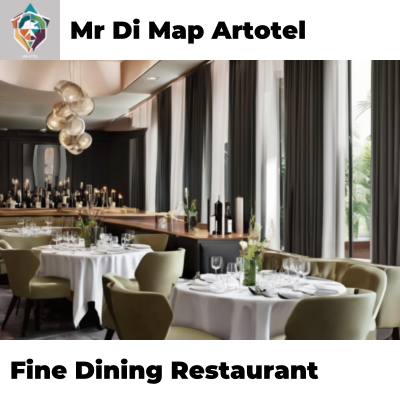
Fine dining represents far more than simply consuming expensive food in an upscale setting. It encompasses a philosophy, a deliberate orchestration of sensory experiences that transforms a meal into something altogether transcendent. The distinction between casual dining and fine dining hinges on meticulous attention to detail, an unwavering commitment to quality, and the ability to create moments that linger in memory long after the final course concludes. At Mr Di Map Artotel, this commitment manifests itself through every aspect of the dining experience—from the carefully curated wine selections to the architectural precision evident in each plated dish.
The contemporary fine dining landscape has evolved considerably. No longer confined to stuffy formality and rigid hierarchies, modern fine dining establishments embrace innovation while respecting tradition. Chefs challenge conventional wisdom. They experiment with unexpected flavor combinations, molecular techniques, and artistic presentations. Yet simultaneously, they honor time-tested culinary principles that have sustained gastronomic excellence across centuries.
Understanding the Multi-Dimensional Nature of Fine Dining
Fine dining encompasses several interconnected dimensions that work synergistically. Consider first the culinary dimension—the actual food itself. This extends beyond taste alone. It involves texture, temperature, aroma, visual appeal, and the psychological associations diners bring to each bite. A truly exceptional restaurant understands that every element matters.
The service dimension proves equally critical. Attentive servers who anticipate needs without hovering. Sommelier professionals who match beverages to courses with scientific precision. Maître d's who navigate the delicate balance between hospitality and respect for personal space. These professionals represent the backbone of fine dining establishments.
The ambiance dimension creates the emotional container within which culinary artistry unfolds. Lighting that neither overwhelms nor obscures. Acoustics engineered to facilitate conversation without intrusive noise. Spatial design that feels neither claustrophobic nor impersonal. Art installations and architectural elements that stimulate visual interest without distraction.
The Architectural and Atmospheric Significance of Mr Di Map Artotel's Design Philosophy
Location matters tremendously in fine dining. Mr Di Map Artotel occupies 5959 Mr Di Ave in Chicago's vibrant landscape, a positioning that acknowledges the importance of accessibility coupled with deliberate separation from mundane street-level chaos. The "Artotel" designation itself signals something crucial—this establishment recognizes that fine dining and artistic expression operate on converging planes.
When you walk through the doors of Mr Di Map Artotel, you encounter more than a restaurant. The space functions as a gallery, a theater, and a sanctuary simultaneously. Every design choice reflects intentionality. The interplay between minimalist aesthetics and luxurious materials creates tension that prevents the space from feeling either austere or oppressive. This balance requires sophisticated design thinking.
The Integration of Contemporary Art with Dining Spaces
The "Art" component in Artotel demands particular examination. Contemporary fine dining increasingly recognizes that visual art enriches the dining experience. Rotating installations. Commissioned pieces. Sculptural elements that interact with architectural features. These are not mere decorations—they are active participants in the sensory journey. They provide conversation starters. They create Instagram-worthy moments while maintaining genuine aesthetic merit. They elevate the experience beyond simple consumption.
Consider how specific artistic elements might anchor different dining areas. Perhaps a particularly striking installation occupies the entrance, setting expectations immediately. Original paintings might line transitional spaces between dining rooms, creating visual narratives that echo culinary narratives unfolding on plates. Sculptural pieces could frame views or create intimate alcoves within larger spaces. This cohesive artistic vision distinguishes Mr Di Map Artotel from establishments that treat decoration as an afterthought.
Spatial Organization and the Psychology of Fine Dining Environments
Fine dining establishments must solve a complex puzzle: how to maintain intimacy within professionally managed spaces. Mr Di Map Artotel accomplishes this through thoughtful spatial organization. Rather than sprawling dining halls, sophisticated restaurants employ architectural elements that create psychological intimacy. Semi-private booths. Elevated sections. Strategic placement of screens or artistic installations. Each technique allows diners to feel simultaneously part of a larger community and enclosed within their own experience.
The psychology here runs deep. Humans evolved in small social groups. Fine dining spaces that acknowledge this evolutionary reality feel more comfortable, more special. When you dine at Mr Di Map Artotel, architectural considerations ensure you experience neither exposure to the entire room nor isolation from its energy. This balance transforms a meal into something approaching performance art—you are both audience member and performer simultaneously.
The Culinary Philosophy Behind Exceptional Fine Dining Menus
The menu at a fine dining restaurant functions as a manifesto. It communicates the chef's vision, training, influences, and current creative preoccupations. Reading a fine dining menu should provoke curiosity. Unfamiliar terminology. Ingredient combinations that initially perplex, then intrigue. Technique references that suggest complexity beneath the surface.
Excellence in fine dining emerges from several foundational commitments. First comes ingredient sourcing—the relentless pursuit of quality at every level. Chefs at establishments like Mr Di Map Artotel maintain relationships with specific purveyors. They know the farmers, fishmongers, and artisanal producers personally. They understand growing conditions, harvest timing, and the subtle variations that distinguish exceptional ingredients from merely adequate ones.
The Seasonality Imperative and Its Impact on Menu Development
Truly fine dining restaurants resist the supermarket convenience of year-round ingredient availability. Instead, menus evolve seasonally, sometimes monthly, occasionally weekly. This commitment to seasonality seems counterintuitive in an age of global supply chains, yet it represents a crucial distinction between fine dining and ordinary restaurants.
Why? Because seasonal eating reconnects diners with natural rhythms. It prevents palette fatigue. It ensures ingredients achieve peak flavor and nutritional profiles. It challenges chefs to innovate continuously rather than defaulting to reliable formulas. Spring vegetables demand entirely different preparations than autumn squashes. A chef must genuinely understand both the ingredients and the seasons to create compelling menus across the full year.
Seasons at Mr Di Map Artotel would likely mean:
- Spring menus emphasizing bright, delicate flavors—asparagus, peas, young herbs, lighter proteins prepared with minimal manipulation
- Summer preparations celebrating abundance—heirloom tomatoes, stone fruits, herbs at peak potency, fish preparations that highlight rather than mask ingredient quality
- Autumn transitions exploring earthiness—mushrooms, root vegetables, game proteins, richer sauces that complement cooling temperatures
- Winter expressions showcasing preservation techniques—braised meats, concentrated stocks, preserved fruits and vegetables, preparations that provide warmth and substance
Technical Mastery and the Difference Between Competence and Excellence
Fine dining distinguishes itself through technical precision that casual diners might not consciously register but absolutely perceive. Consider something as seemingly simple as a vegetable. At ordinary restaurants, vegetables arrive overcooked, mushy, indistinguishable from canned versions. At fine dining establishments, vegetables maintain textural integrity. The exterior might caramelize slightly through precise heat application. The interior remains perfectly tender. Seasoning throughout, not just on the surface. Flavor concentrated rather than leached away.
This technical mastery extends through every component. Sauces possess perfect viscosity—coating proteins without running. Proteins reach exact target temperatures, neither underdone nor overdone. Plating demonstrates both artistic vision and practical considerations regarding temperature maintenance and flavor complementarity. Each element relates to every other element. Nothing is incidental.
The difference between a competent cook and a fine dining chef often comes down to thousands of repetitions. A chef at Mr Di Map Artotel might execute a particular sauce hundreds of times, adjusting for ingredient variations, seasonal fluctuations, altitude, humidity. This accumulated knowledge becomes intuitive, allowing for adjustments that maintain consistency while honoring ingredient variability.
The Paramount Role of Beverage Pairings and Sommelier Expertise
Wine pairing at fine dining restaurants transcends the simplistic "white with fish, red with meat" axiom. Sophisticated wine programs consider flavor profiles, weight, acidity, tannin structure, and how specific wines interact with specific preparations. A Burgundy Pinot Noir differs profoundly from a California Pinot Noir, not merely in quality but in character—the European version might feature more delicate, mineral-driven profiles, while the California version might emphasize fruit concentration.
Understanding these distinctions allows sommeliers to navigate menus with precision. They consider not merely individual courses but the progression across an entire meal. How will the first course's wine influence palate readiness for subsequent courses? Does the menu build in intensity, or does it employ variation and contrast? These considerations represent the difference between adequate wine pairing and genuine expertise.
The Expanding Conversation Beyond Traditional Wine Selection
Contemporary fine
dining establishments increasingly recognize that wine represents only one element within broader beverage programming. Craft cocktails crafted specifically to complement menu items. Artisanal non-alcoholic beverages that demonstrate equivalent creativity and sophistication. Beer selections that surprise with their complexity and relevance. Spirits programs extending beyond casual after-dinner drinks to become integral components of the culinary narrative.
At Mr Di Map Artotel, beverage programming likely reflects this expansive philosophy. Rather than presenting wine lists as afterthoughts, a fine dining establishment treats beverages as collaborative partners in the dining experience. A sommelier or beverage director considers each menu item's preparation method, primary flavors, secondary notes, textural elements, and even the emotional tone the chef intends to create. Matching beverages requires understanding culinary intention as deeply as understanding the beverages themselves.
The Science and Art of Flavor Pairing Philosophy
Pairing decisions emerge from multiple theoretical frameworks. Traditional pairing focuses on complementarity—finding beverages that echo or enhance flavors already present. A tomato-forward sauce pairs with acidic wine that mirrors that acidity. A rich, buttery preparation pairs with wines possessing sufficient structure to cut through fat while complementing the butter's richness.
But modern sommeliers also employ contrast strategies. A heavily spiced dish might pair with a beverage offering cooling sensations or contrasting flavor profiles that create interest through juxtaposition rather than harmony. An acidic dish might pair with wines of lower acidity, creating balance rather than amplification. These decisions require genuine expertise, not merely familiarity with standard formulas.
Consider the progression across a multi-course meal. Each pairing must stand on its own merits while functioning within the larger arc. Early courses might feature lighter beverages that prime the palate. Middle courses might explore more complex pairings as palate sophistication develops. Final courses might return to slightly simpler profiles to prevent overwhelming the diner's sensory capacity. This architecture distinguishes amateur pairing from professional expertise.
The Intricate Dance of Service Excellence and Professional Standards
Service at fine dining restaurants operates according to principles that seem almost choreographed. Yet this precision emerges not from rigid memorization but from genuine understanding of hospitality principles applied with flexibility and attentiveness.
Professional fine dining service begins with fundamental commitments. Servers understand that their role involves far more than delivering food and beverages. They function as guides through unfamiliar territory. They facilitate communication between kitchen and table. They ensure that diners feel welcomed, understood, and cared for throughout their experience. This emotional labor deserves recognition as genuine professional skill.
The Specific Techniques and Standards That Define Professional Service
Fine dining service operates according to established protocols refined across decades. These aren't arbitrary formalities—they emerge from practical considerations regarding efficiency, safety, and diner comfort. Consider a few examples:
- The approach from the left, clear from the right protocol minimizes disruption while ensuring clean angles for plate presentation
- Knowledge of allergies and dietary restrictions communicated clearly between front and back of house, preventing dangerous errors
- Pacing between courses that allows adequate digestion time without creating awkward silences or rushing diners through their experience
- Tableside techniques for certain preparations—carving, plating, sauce application—that add theatrical elements while maintaining temperature and presentation integrity
- Attentiveness to beverage levels that ensures glasses remain appropriately filled without hovering obtrusively
- Clear communication regarding menu items, including preparation methods, potential allergens, and chef recommendations
These protocols serve specific functions. They prevent accidents. They ensure consistency across different server shifts. They communicate professionalism through predictable excellence. Yet the finest servers transcend mere protocol adherence. They read tables intuitively. They adjust their approach based on diner preferences. They recognize when someone wants conversation and when someone prefers quiet contemplation.
The Psychological Dimensions of Hospitality and Guest Relations
Exceptional service at an establishment like Mr Di Map Artotel requires psychological sophistication. Servers must recognize that dining experiences carry emotional weight beyond mere sustenance. Perhaps someone is celebrating a milestone. Perhaps someone is negotiating a business deal. Perhaps someone is on a first date or attempting to repair a fractured relationship. Service professionals must navigate these dynamics with appropriate calibration—offering warmth without intrusion, attentiveness without suffocation, expertise without condescension.
This psychological dimension extends to handling inevitable complications. A course arrives with an issue—perhaps something doesn't meet expectations, perhaps an error occurred in the kitchen. Professional servers at fine dining establishments handle these situations as opportunities rather than problems. They address concerns with genuine concern rather than defensiveness. They empower themselves to solve problems creatively rather than deferring to management for every decision.
The Economic Realities and Value Proposition of Fine Dining Experiences
Fine dining occupies a curious economic position. Meals at establishments like Mr Di Map Artotel represent significant financial investments. Yet framing these experiences purely in economic terms misses something essential. The value derives not from cost-effectiveness but from the concentration of expertise, quality, creativity, and attentiveness that fine dining uniquely offers.
Consider what fine dining actually provides. You're purchasing not merely food, but the accumulated knowledge of a chef who may have trained for decades. You're accessing ingredient quality that might represent the top percentage of what's available globally. You're experiencing service from professionals who have practiced their craft obsessively. You're accessing beverage selections curated by experts. You're experiencing spatial design that may have required significant investment and thoughtful consideration.
Understanding Value Beyond Simple Price-to-Portion Ratios
Fine dining challenges conventional consumer logic that equates value with quantity. At a casual restaurant, you might receive a larger portion for less money. At a fine dining restaurant, portions might appear modest, yet the value proposition differs fundamentally. You're not paying for volume. You're paying for precision. For craftsmanship. For innovation. For the concentrated excellence of every element.
This distinction matters for anyone considering fine dining experiences. Fine dining isn't necessarily "better" than casual dining—they serve different functions. Casual dining offers accessibility, comfort, and straightforward pleasure. Fine dining offers concentrated artistry, discovery, and experiences that often feel impossible to replicate at home regardless of your own cooking skills.
The economics of fine dining also reflect genuine operational realities. Premium ingredients cost more. Skilled labor commands appropriate compensation. Maintaining sophisticated facilities requires investment. Service at the level Mr Di Map Artotel provides demands staffing ratios that would seem luxuriously inefficient in casual establishments. These factors translate into prices that reflect operational realities rather than arbitrary markups.
The Justification for Premium Pricing in Contemporary Fine Dining
Several factors legitimately drive fine dining pricing. First, ingredient sourcing at the highest levels. A chef seeking the finest caviar, the rarest mushrooms, the most exceptional seafood, the most precisely raised proteins cannot access commodity pricing. These ingredients cost more because they're genuinely scarce, genuinely exceptional.
Second, labor costs reflect the skill required. A fine dining chef represents years—often decades—of deliberate training. Specialized skills command premium compensation. Similarly, front-of-house professionals at fine dining establishments typically earn more than casual restaurant workers, reflecting their expertise and the value they provide.
Third, facility costs and ambiance maintenance require ongoing investment. The artistic elements, architectural features, and design sophistication visible at establishments like Mr Di Map Artotel don't emerge inexpensively. They require skilled designers, quality materials, and thoughtful maintenance.
Fourth, food waste at fine dining establishments typically exceeds casual restaurants because of quality standards. If a preparation doesn't meet standards, it's discarded. This commitment to excellence means accepting losses that would seem unacceptable in cost-conscious operations.
Finally, profit margins at fine dining establishments often approximate those of casual restaurants despite higher prices. The additional revenue funds superior ingredients, higher compensation, and continuous innovation rather than simply increasing profits. This reinvestment distinguishes restaurants committed to sustained excellence from operations viewing fine dining primarily as a premium pricing opportunity.
The Journey of Discovery Through Multi-Course Tasting Experiences
Many fine dining establishments offer tasting menus—curated sequences of multiple courses designed to tell a culinary story. These experiences require different approaches than à la carte ordering. A tasting menu represents a chef's vision presented in progression. Courses build upon previous ones. Flavors and techniques echo and contrast. The entire experience feels intentional, orchestrated.
A typical fine dining tasting menu might include eight to twelve courses, though variations exist. Some establishments offer shorter formats. Others extend to fifteen or more courses. The number matters less than the coherence of the progression. Each course should feel necessary, not arbitrary. Each transition should create interest through surprise, contrast, or evolution rather than jarring disjuncture.
The Narrative Arc and Emotional Progression Throughout Extended Dining
Think of a tasting menu as a story with distinct acts. The opening courses introduce themes and establish tone. Perhaps an amuse-bouche arrives—a single bite that whets appetite while establishing the chef's sensibility. Maybe the first course presents something surprisingly light, something